
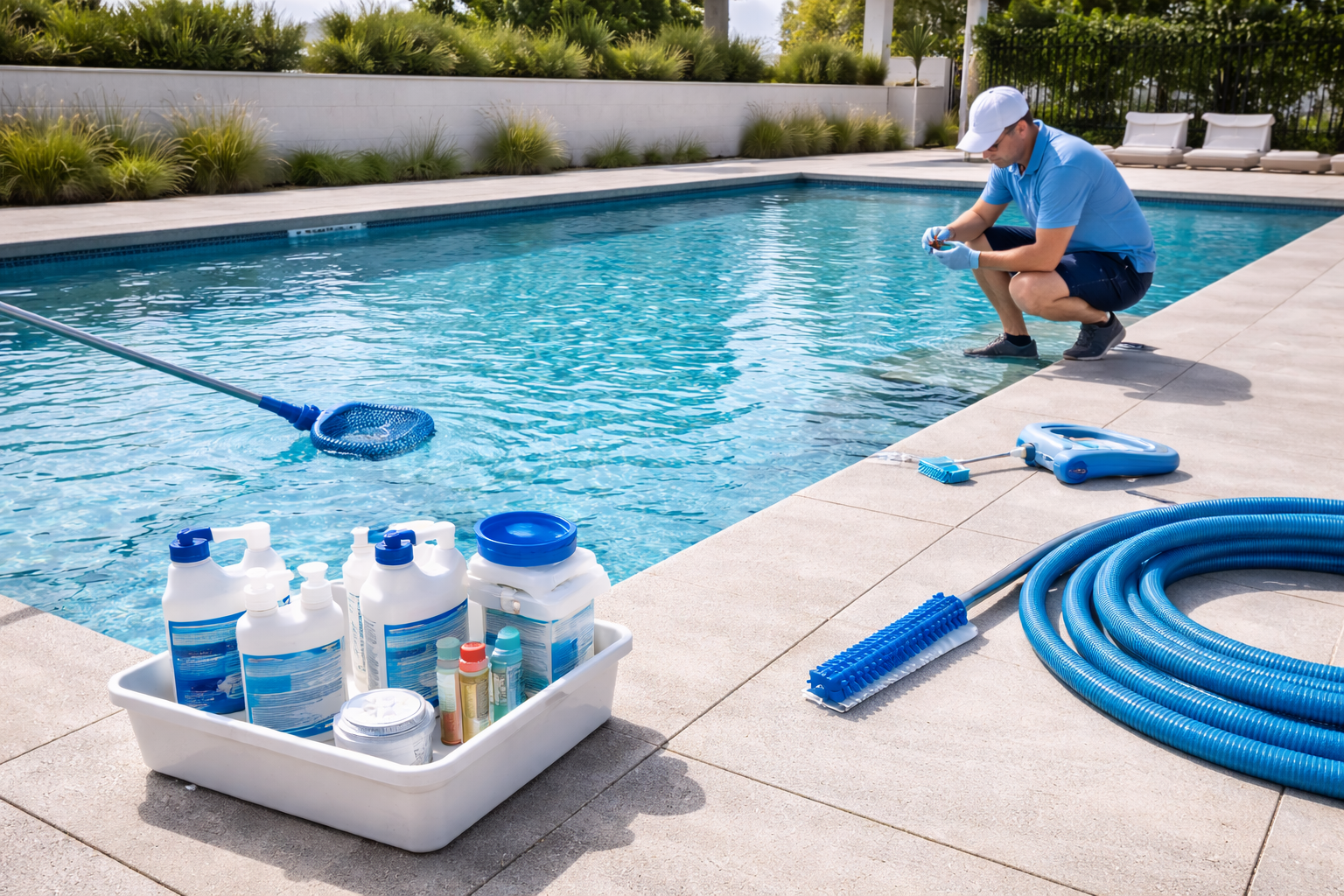
Swimming pools are places of relaxation, exercise, and social connection — but they also require careful care to ensure they remain clean, safe, and healthy for everyone who uses them. Proper sanitation is more than just aesthetic clarity; it’s essential for preventing the spread of bacteria, viruses, and waterborne illnesses.
At Sunset Pools, we help pool owners and operators understand and implement the best sanitation practices so that every swim is safe, refreshing, and worry-free.
Why Sanitation Matters
Whether a pool is privately owned or open to the public, water that isn’t properly treated can become a breeding ground for harmful microorganisms. Poor sanitation can lead to:
- Eye and skin irritation
- Respiratory discomfort
- Gastrointestinal illness
- Transmission of bacteria and viruses
- Cloudy or unbalanced water
Good sanitation protects users and preserves the life of your pool equipment and surfaces.
Core Principles of Pool Sanitation
Effective pool sanitation relies on a combination of proper water treatment, chemical balance, and filtration. Key areas include:
Balanced Water Chemistry
Maintaining proper chemical levels is the foundation of sanitation:
- pH Level: Keeps water neither too acidic nor too alkaline
- Sanitizer Level: Chlorine or other sanitizers keep bacteria in check
- Alkalinity and Calcium Levels: Prevent corrosion and scaling
Balanced water isn’t just safer — it keeps your pool materials and equipment performing better for longer.
Effective Filtration
Filtration systems help remove debris, particles, and microscopic contaminants from the water. A well-maintained filter:
- Circulates water efficiently
- Removes fine particles
- Works in harmony with chemical sanitizers
Regular cleaning, backwashing, and cartridge maintenance ensure peak performance.
Sanitizing Methods
There are several effective ways to sanitize pool water:
- Chlorination: The most common and reliable method
- Bromine: Often preferred in indoor or spa applications
- Saltwater Systems: Provide gentler water using a salt generator
- UV and Ozone Systems: Supplement chemical sanitation
Choosing the right method depends on pool type, usage, and owner preferences.
Special Considerations for Public Pools
Public pools face additional sanitation challenges due to higher usage and stricter regulations. These pools must meet specific standards that include:
- Frequent testing throughout the day
- Documentation of chemical readings
- Routine professional inspections
- Managing swimmer load and hygiene
Public health codes are in place to protect thousands of annual visitors — making sanitation protocols critical.
Sanitation systems need the right setup and maintenance to work correctly. If you’re experiencing any of the following, it’s time to get professional help:
- Water that stays cloudy despite cleaning
- Persistent algae or bacteria growth
- Unbalanced chemical readings
- Equipment that isn’t circulating water properly
At Sunset Pools, we offer sanitation assessments, system upgrades, and maintenance plans tailored for both public and private pools.
Your Pool — Clean, Safe, and Enjoyable
Proper sanitation is not an optional add-on — it’s a critical part of pool ownership. With the right practices and professional guidance, your pool can be a healthy and inviting space for every swim.