
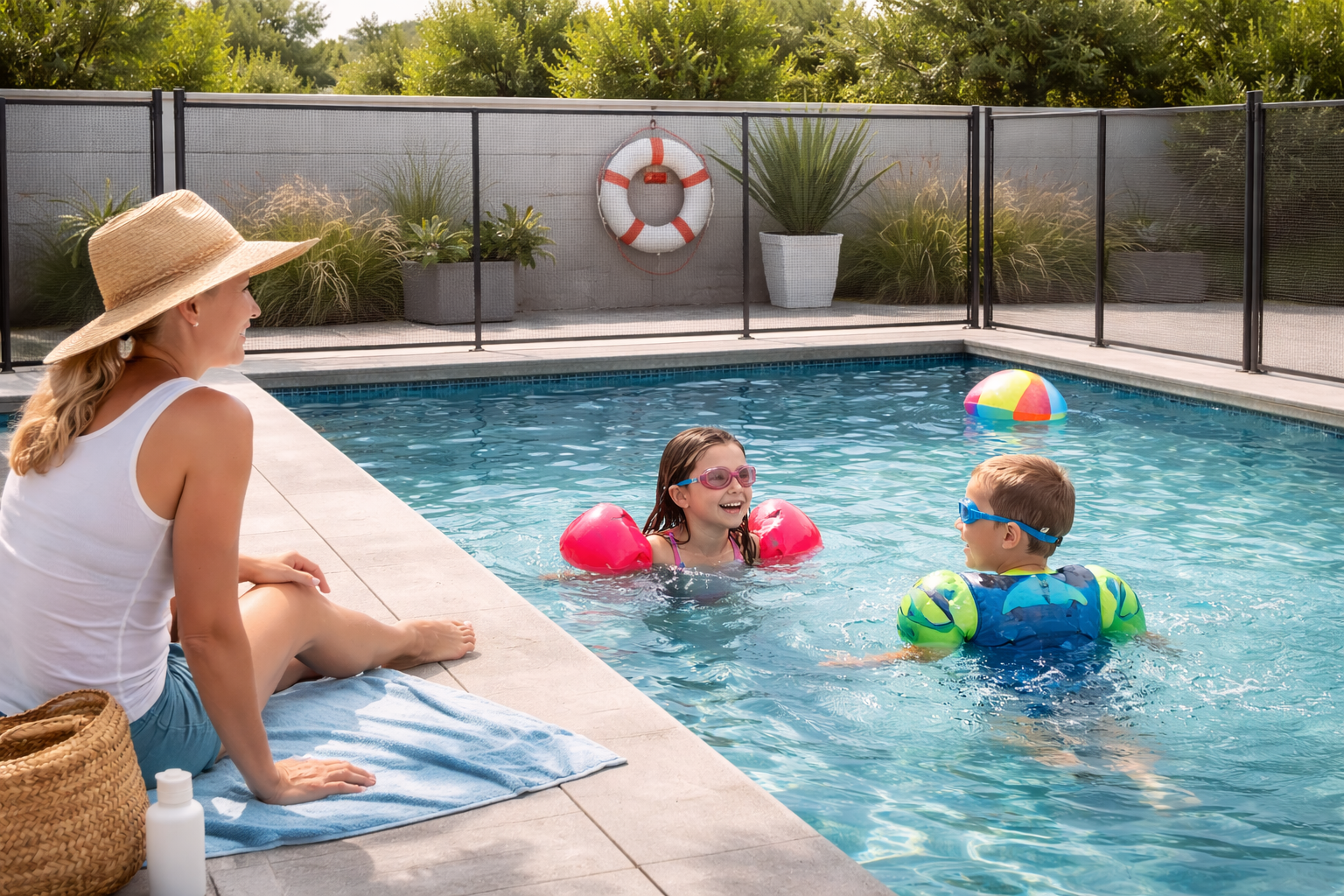
Swimming is one of life’s great joys — and a valuable life skill — but ensuring your child stays safe in and around the water is the top priority for every parent. Whether your family’s pool is at home, a community facility, or a vacation spot, these practical tips and best practices will help you create a safer swimming environment for your child.
Always Provide Active, Uninterrupted Supervision
Nothing replaces focused adult supervision.
- Always have a responsible adult watching when a child is in or near the pool.
- Avoid distractions like phones, reading, or conversations while supervising.
- For younger children, maintain arm’s reach contact at all times.
Active supervision reduces risk and means you can respond quickly if needed.
Enroll in Swimming Lessons
Formal swimming lessons are one of the most effective ways to reduce risk.
- Start lessons early — even toddlers can begin water familiarization.
- Choose programs with certified instructors who focus on safety, comfort, and skill building.
- Continue lessons as your child grows to build confidence and ability.
Swimming skills boost safety and provide lifelong confidence in the water.
Use Proper Safety Gear
Safety gear supports learning and protection — but it’s not a substitute for supervision.
- Use U.S. Coast Guard–approved life jackets for young children or weak swimmers.
- Avoid inflatable toys or floaties as the sole safety device — they can give a false sense of security.
- Consider arm float belts in lessons under professional guidance only.
Always pair safety gear with attentive adult supervision.
each the Rules and Respect for Water
Clear rules help children understand boundaries:
- No running near the pool.
- No diving in shallow areas.
- No swimming without an adult present.
Reinforcing rules consistently helps children respect the water and understand risk.
Install Safety Barriers Around the Pool
Barriers provide an important extra layer of protection.
- A four-sided fence with a self-closing, self-latching gate can prevent accidental access.
- Pool covers should be strong and secure when the pool is not in use.
- Alarms on doors or gates can alert you if someone enters the pool area.
These physical barriers reduce the chance of unsupervised access.
Make Emergency Preparedness a Priority
Being ready for the unexpected is key.
- Learn CPR and basic first aid — it can make all the difference in an emergency.
- Keep a phone nearby when swimming so help can be called instantly.
- Have a well-stocked first-aid kit near the pool.
Confidence in emergency response enhances safety for everyone.
Ensuring your child’s swimming safety means combining vigilance, education, tools, and preparation. Pools should be joyful places — and with the right precautions, they can be both fun and safe.